CA Workplace Violence Prevention: What Small Employers Actually Need
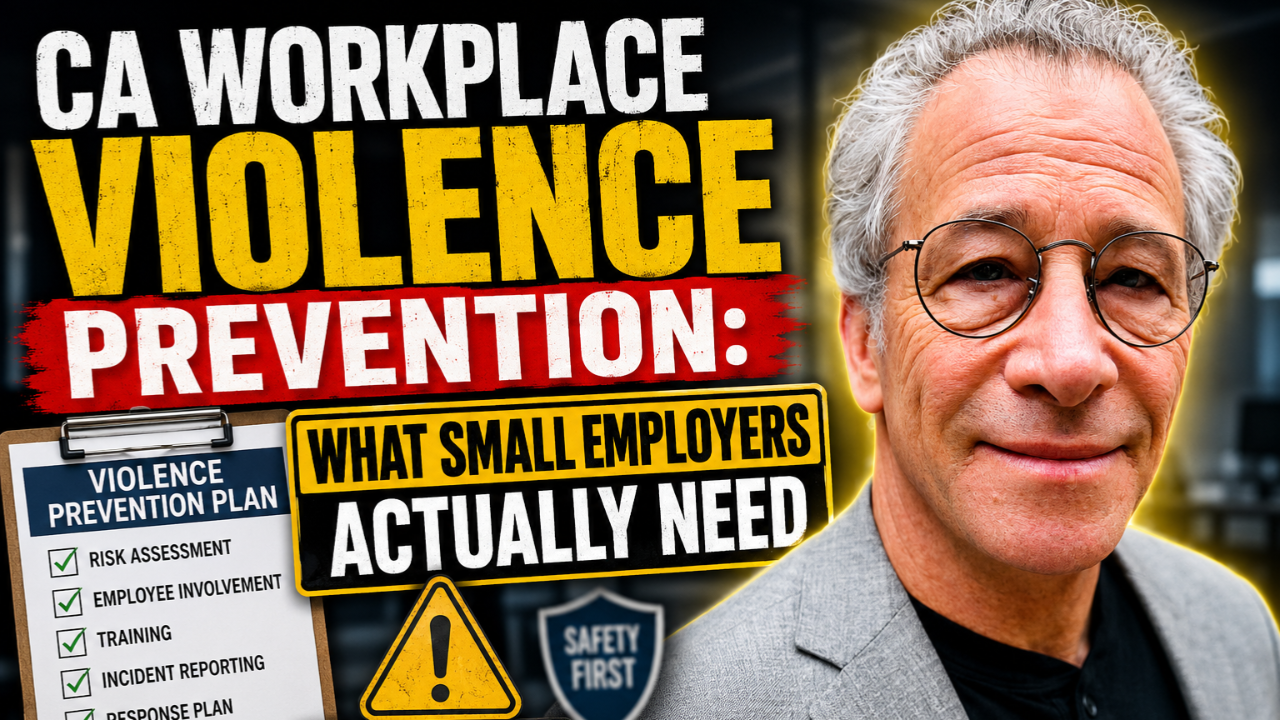
Small California employers face different hurdles than do large employers when it comes to complying with California’s workplace violence prevention law.
While having fewer decision makers allows smaller employers to implement process changes faster than larger employers, smaller employers typically lack compliance and security teams so those responsible for compliance, often must wear other hats too.
And that can feel a bit overwhelming.
In this piece, we’ll clarify what small employers need to focus on in order to comply with California’s workplace violence prevention law, and to keep your employees safer from violence.
A true win-win for your organization.
I spent 30 years investigating violence from a variety of angles, including helping plaintiff attorneys build cases against employers where violence occurred, representing people charged with criminal offenses, and conducting internal workplace investigations into violence and threats of violence.
And for over 10 years, I’ve applied what I learned while investigating violence to help employers protect employees and their organization from the harms of workplace violence.
If you’re a California employer with 5–30 employees and want a quick, no-obligation snapshot of where you stand under California’s new rules, you can get a free 15‑minute compliance snapshot here.
Workplace Violence Prevention Plan: Beginning on 7/1/2024 all California employers must establish, implement, and maintain a workplace violence prevention plan. Not having a plan can lead to a 5-figure regulatory fine from Cal/OSHA and expose your organization to larger fines if a preventable violence incident occurs.
It’s best to think about your workplace violence prevention plan as your road map to a safer workplace.
Within the plan you’ll identify the various steps—the how—that you’ll take to:
- Identify and assess the specific workplace violence safety hazards that your employees face.
- Address those specific safety hazards to lessen your employees safety risks.
- Involve your employees in the different facets of creating a prevention plan, and in training your employees to be safer from violence.
- Implement changes in work processes and practices to keep your employees safer from violence.
- Help employees notify you of their safety concerns and to effectively investigate all complaints about violence and threats of violence.
- Communicate with employees about real time safety threats.
- Identify what employees should do during an incident.
- Identify who is responsible for maintaining a violent incident log for any incidents that occur.
Implementation: California requires employers to do more than just create a workplace violence prevention plan, you must implement the plan too. Once you’ve identified the how, and created your plan, your focus switches to enacting your plan by working with your employees on:
- Changes to work processes and practices that you’ve identified through your assessment to improve safety, such as visitor check-ins.
- Incident response. Preparing your team to respond to an incident, including identify and train those with specific responsibilities on what to do.
- Accountability practices to ensure that people do what’s required of them.
- Trainings. Providing the variety of required trainings to your employees, and do so at least once per year.
- Strategies to avoid physical harm, making sure your employees can apply the different practices you’ve identified that will help them to avoid physical harm should violence occur.
Assessments: California requires employers to conduct regular assessments for safety hazards that can affect your employees since those can change over time. The state also requires that you conduct assessments to determine the effectiveness of the processes and trainings that you implement to ensure that they address those safety hazards you’ve identified.
You’ll also need to do an assessment, using employee input, of everything you’ve put into your prevention plan as a final check before it goes into effect to make sure that it works in practice and not just on paper.
You’ll also need to assess your plan any time that an incident of violence, or a threat of violence occurs. And to conduct a full assessment of your prevention plan annually.
Violence prevention that complies with California law and keeps your employees safer requires an active on going approach. A critical part of that approach is to work with your employees during each phase of plan development and implementation to ensure that everyone knows what to do in case of an incident.
Next step for California small employers
Reading about California’s workplace violence requirements is one thing. Knowing how your own business would look if something happened tomorrow is another.
If you’re a small California employer and your people deal with the public, book a free 15‑minute Workplace Violence Compliance & Safety Snapshot.
In one short call, we’ll look at your policies, training, and incident handling through the same lens a regulator or plaintiff lawyer would use and flag your top 2–3 risk areas, plus 1–2 practical next steps.
[Book your free 15‑minute Snapshot]
Prefer email instead of booking a time? Email me at
